I’m a nervous traveler.
The moment we start packing for a trip, I can feel the tension building. Did we leave enough time to get ready? What if traffic is bad? What if security lines are long? I like to be at the airport a full two hours early, even for a short domestic flight — just in case something goes wrong.
This is not a hypothetical concern. Years ago, on a trip to Arizona, one member of my family (who shall remain nameless) accidentally left their bag with their wallet and ID behind a bush in the desert during a hike. (It was a heavy bag, and we figured we’d pick it up on the way back. We forgot.)
We were already cutting it close, and by the time we realized the bag was still alone in the desert and went back to retrieve it, we had missed our flight.
Ever since then, I’ve taken a better-safe-than-sorry approach to travel. I don’t fully relax until we’re through security and at the gate with plenty of time to spare.
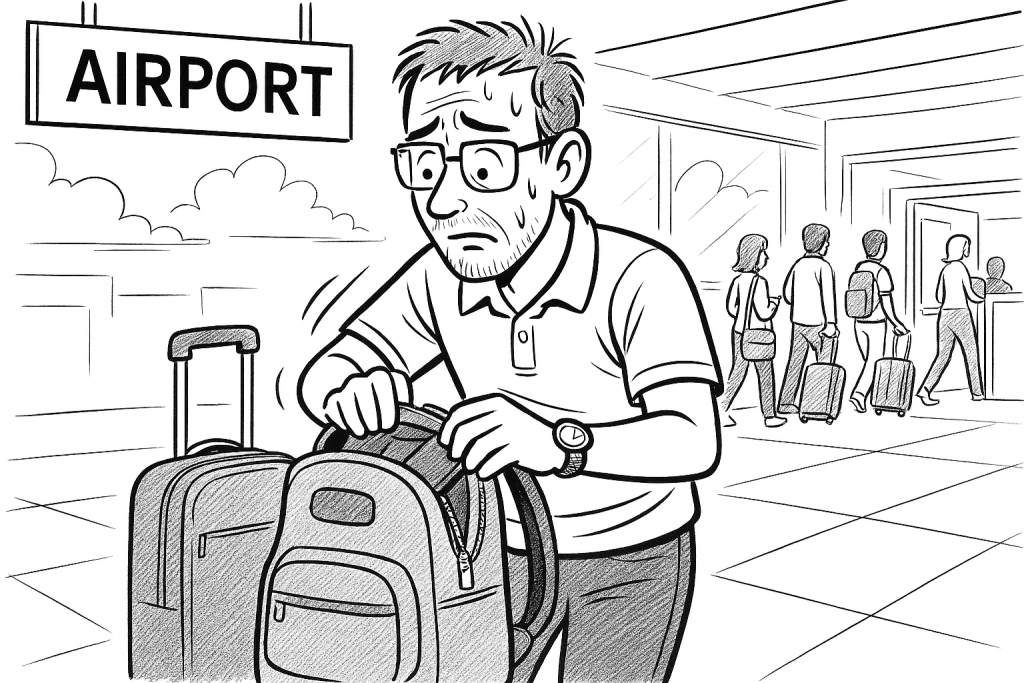
And that “better-safe-than-sorry” approach is exactly the mindset you need when designing a voice network.
High Availability Isn’t Just a Luxury
For most telcos, voice is still a mission-critical service. Whether you’re supporting a 911 call, a business client, or a hospital switchboard, your customers expect dial tone — always.
Which means that planning for failure isn’t a sign of pessimism. It’s a sign of professionalism.
Just like the anxious traveler who wants a buffer in case of traffic or lost purses, your network should be built with redundancy at every layer, so that if (or when) something does go wrong, service continues without interruption.
What Can Go Wrong?
When we talk about high availability, the first question to ask is: what could fail?
Here’s a short list — and you may want to run through it for your own network:
- Hardware blades or servers in your softswitch or SBC
- Firewall appliances
- Routers or core switches
- Cabling between platforms
- Power supplies (including upstream power outages)
- Internet or carrier connectivity
- Software platforms that hang or crash
- Even human error, such as misconfiguring a device or cutting over the wrong route
The goal isn’t to eliminate every possible point of failure — that’s impossible — but rather to make sure that when something does go wrong, there’s a backup in place.
Design for Failure
The key to voice network redundancy is to design for failure.
That means assuming that at some point, something will break — and then building a network that can withstand and recover from that break with minimal disruption.
Some best practices:
- Dual-homing critical devices (e.g. having two firewalls in active/passive or active/active mode)
- Geo-redundant application servers, with SIP signaling and RTP able to reroute automatically
- Redundant power supplies and battery backup
- Separate physical paths for routing — ideally with diverse fiber routes
- Multiple upstream SIP trunks or TDM interconnects, with failover logic in place
But Don’t Stop at Design — Test It
Here’s the part many people skip: you have to test it.
It’s not enough to design a redundant system on paper. You need to simulate failures in production (or a staging environment) to verify that your failover logic actually works the way you expect.
- If you unplug a cable, does the traffic reroute?
- If you reboot a blade, does the standby unit take over seamlessly?
- If you cut power to one site, does the other site pick up the load?
These tests don’t just verify the technology — they also help your team build confidence. When a real outage happens, you’ll know what to expect, and how to respond quickly.
The Goal: Calm Under Pressure
Ultimately, redundancy gives you peace of mind.
You’ll still work hard to prevent failures. You’ll still monitor alarms and patch systems and replace aging equipment. But when something does go wrong — because it always will, eventually — your network will keep working while you fix the issue.
Just like my travel anxiety is eased when I’m safely through security, a well-designed voice network allows your team to relax, knowing that a single failure won’t take you down.
Final Thoughts
High availability isn’t just about checklists — it’s about mindset.
It’s about asking “what if this breaks?” not because you expect it to, but because you care about your customers enough to plan ahead.
At Award Consulting, we’ve helped many rural telcos design, implement, and validate redundant voice networks. If you’re unsure whether your current design can withstand failure — or if you’d like to test your redundancy plan — we’d be happy to help.
It’s better to check things now… than to get that panicked phone call later.
